 English
 हिंदी भाषा
Introduction
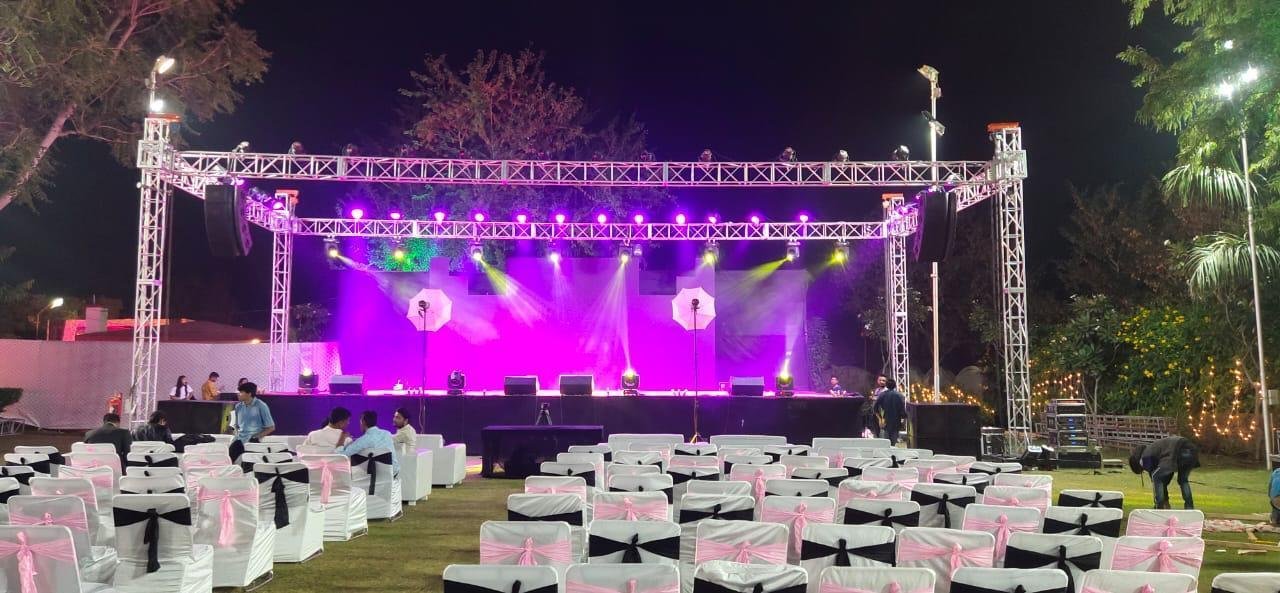
DJ truss plays a major role in stage lighting, event presentation, and overall setup safety. A proper installation process reduces risk and helps your lighting system perform better during weddings, concerts, corporate shows, and live DJ events.
Why Safe Installation Matters
A truss system carries lighting and event equipment overhead, so weak mounting or poor balance can create serious hazards. Safety guidance for lighting truss repeatedly emphasizes stable rigging, correct hardware, and staying within the weight capacity of the truss.
Step 1: Check the Truss Before Installation
Inspect the truss before every use and look for dents, bending, cracks, worn connectors, damaged welds, corrosion, or missing parts. Truss inspection guidance also recommends checking geometry for twisting, racking, sweep, or other visible deformation before setup begins.
Step 2: Use the Right Base and Support
Place the truss on a stable and level surface, and use proper base plates, supports, and approved rigging hardware. Mounting guidance stresses that all components should be tightly fastened to prevent movement during use.
Step 3: Mount the Lights Correctly
Attach each light using the correct clamp and position it according to the lighting effect and distribution you want. After positioning, tighten the clamp carefully according to manufacturer instructions so the fixture stays secure without damaging the aluminum truss.
Step 4: Add Safety Cables
Every mounted light should also be secured with a safety cable in addition to its clamp. Safety cable guidance recommends looping the cable around a secure point on the truss close to the fixture and checking that the cable is not twisted or loosely attached.
Step 5: Balance the Load
Do not place too much weight on one side or one section of the truss. Safety recommendations say the equipment weight should be evenly distributed across the truss and always remain within the truss load capacity.
Step 6: Follow Safe Working Practice
Wear gloves during installation, keep the work area clear, and turn off power before adjusting mounted lights. Assembly guidance also recommends using proper safety equipment and double-checking each connection before the event starts.
Step 7: Maintain a Regular Inspection Schedule
Truss systems should be cleaned and inspected on a routine schedule, with records kept for periodic checks. Maintenance and inspection sources recommend regular visual checks, documented maintenance, and more in-depth inspections at least annually, or more often in heavy-use or harsh environments.
Common Mistakes to Avoid
Common errors include loose clamps, missing safety cables, uneven weight distribution, ignoring damaged welds, and using truss without inspection. These issues are directly connected to the most repeated safety warnings across installation and inspection guidance.
Conclusion
A safe DJ truss installation depends on strong hardware, correct light mounting, safety cables, balanced loading, and regular inspection. If you want long-lasting and reliable performance for Indian events, choose quality aluminum truss products and follow a professional installation process every time.
नई टिप्पणी जोड़ें